A Fruit or A Vegetable?

Yes, Rhubarb is a tart vegetable used to make tasty desserts and sauces. The mere use of the word rhubarb can have many meanings when not presented on a menu:

  • A bench-clearing brawl in baseball
  • A hubbub or irrelevant chatter
  • A Rhubarb Patch as describing the Brooklyn Dodgers Ebbits Field
  • “Out in the rhubarb patch”, meaning out in a far off area

Here’s an easier to swallow meaning. . .This recipe is always a crowd pleaser and that's no bunch of rhubarb.

Rhubarb Crisp | chefgeorgehirsch.com

recipe by George Hirsch | Makes 4-6 servings

4-6 cups rhubarb stalks, cut into 1/2 inch pieces
juice from one orange
1 Tablespoon orange zest, finely grated
1 cup Turbino sugar (sugar in the raw)
3/4 cup flour

Cover rhubarb with half of the sugar (1/2 cup sugar), orange juice, zests and marinate 1 hour. Mix remaining sugar and flour together and combine with marinated rhubarb. Grease a 9 inch ovenproof casserole or several small individual ramekins; add marinated rhubarb and sugar flour mixture to greased baking dish.

For the topping:
3/4 cup flour
1/4 cup butter, softened
1 Tablespoon ground cinnamon.
3/4 cup rolled oats (not instant oatmeal)
1/2 cup light brown sugar

Mix flour, butter, ground cinnamon until it makes a smooth pastry dough. Add oatmeal and brown sugar, crumble together and place on top of marinated rhubarb in baking dish. 

Bake in a preheated oven at 375 degrees for 45 minutes or until top is light brown, the top is crisp and rhubarb is tender. Serve warm with coffee ice cream.

Tip:
Mix apples, pears, peaches, plums or berries in with rhubarb for seasonal dessert variations. Mix in a hand full of pecans or walnuts for a crunchy addition.
Pastry of the Nobility

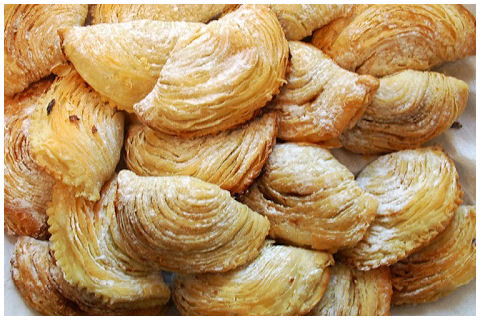
That is- during the Renaissance. Have you ever had sfogliatelle? It just happens to be the very first pastry I learned to bake; let me add labor intensive to make. I have loved it ever since. As you know, I don't gravitate towards chocolate, mouses or cakes. The sfogliatelle is anything but that. It's the right mix of many, many layers of thin flakey dough, stuffed with a citron semolina and ricotta filling; shaped like a clam shell. It has a bit of crunch with a dense custard textured center.

Sampling purely for research purposes, (ahem) I find it difficult to decide - is sfogliatelle better in Rome or Amalfi? Well New Yorkers, I admit this Neapoliatan pastry tastes just as good in the Bronx, NY. But please do yourself a favor and go to a real authentic Italian pastry shop. Tastes best, served warm with a good espresso.

sfogliatelle

February Flavors

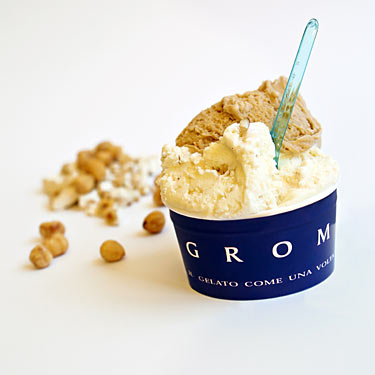
Well here's one more reason to think of warmer weather in February; Grom and their acclaimed Gelato and Fruit Sorbets. Grom's Gelato tastes like I walked-up to a Gelateria on Via Veneto, but the odd thing is - I'm in New York. How is this possible? It's a great story. 

Two Torin partners, Martinetti and Grom fused their passion and intentions to make the best artisanal Gelato and make it available to the world, mindfully. Sounds simple, but it's not. To producer food this way, it is actually harder. They simplified everything in the ingredients; adding no preservatives or flavor enhancers. Slow food is the basis for their local ingredients. Grom takes great pride in telling you what's in their product and also go through the effort to list what you are not eating. Each ingredient has an address of origin and a story behind it. The milk is from Savigliano, the peaches from Canale, the almonds from Sicily, and strawberries from Ribera - you get the picture. The partners have also acquired land to produce some of there own ingredients.

In just a matter of seven years Grom has launched a few shops in New York; in The Village and on The Westside, with another on the way. Even with Grom expanding, Martinetti and Grom have stressed the importance of not getting too big, shunning the word franchise. 

The word on Grom pistacchio, it's the best - you just have to try it. 

GROM New York:
233 Bleecker Street (and Carmine) - Greenwich Village - New York City - Ph. (+1) 212 206 1738 
2165 Broadway (and 76th) - Upper West Side - New York City - Ph. (+1) 212 362 1837

For Chocolate Lovers

We tend to think of chocolate as a sweet candy created during modern times. But actually, chocolate dates back to the ancient people of Mesoamerica, who drank chocolate as a bitter beverage. For these people chocolate wasn’t just a favorite food, it also played an important role in their religious and social lives. I have to admit chocolate is not one of my favorite foods, but I do find the history of chocolate fascinating. 

===========

MODERN HISTORY

Europeans drank their chocolate with sugar and milk. As with the Spanish, most Europeans liked their chocolate sweetened with sugar, another expensive and exotic import from faraway plantations. And in the late 1600s, Sir Hans Sloane, president of the Royal College of Physicians, introduced another culinary custom; mixing the already popular chocolate drink with milk for a lighter, smoother flavor.

In 1879, Rodolphe Lindt created another important device: the conching machine (so called because the earliest machines resembled a conch shell). It churned the paste made from cacao seeds into a smooth blend perfect for rich, creamy chocolate bars. The divine drink, builds up resistance and fights fatigue. A cup of this precious drink permits a man to walk for a whole day without food.

Hundreds of new chocolate factories and flavors have come and gone. Over the years, many creative confectioners developed lots of new varieties and flavors of chocolate. A few icons of the early 1900s still survive today. Hershey got his start making chocolate-coated caramels in 1893. And his competitors, the father-and-son team of Mars, created the malted-milk-filled Milky Way after an inspiring trip to the local drugstore soda fountain.

Milton S. Hershey stated, “Caramels are only a fad. Chocolate is a permanent thing.”

During World War II, American soldiers introduced chocolate to the Japanese, where its popularity continues to rise today.

=============

CHOCOLATE TRIVIA

Chocolate syrup was used to represent blood in the famous 45 second shower scene in Alfred Hitchcock's movie, "Psycho" a scene which took 7 days to shoot. 

Once upon a time, money did grow on trees. Cocoa beans were used as currency by the Mayan and Aztec civilizations over 1400 years ago. When they had too much money to spend, they brewed the excess into hot chocolate drinks.

The Swiss consume more chocolate per capita than any other nation on earth. That's 22 pounds each compared to 11 pounds per person in the United States.

Rumor has it that Napoleon carried chocolate with him on all his military campaigns for a quick energy snack.

The word "chocolate" comes from the Aztec word xocolatl, which means "bitter water".

The amount of caffeine in chocolate is lower than most people think. A 1.4 ounce piece of milk chocolate contains about the same amount of caffeine as a cup of decaffeinated coffee. There is an average of 6 mg. of caffeine in both an ounce of milk chocolate and a cup of decaffeinated coffee, while a cup of regular coffee contains between 65 and 150 mg. of caffeine.

HOT CHOCOLATE CARAMEL Recipe | George Hirsch

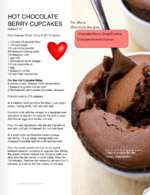
HOT CHOCOLATE BERRY CUPCAKES Recipe | George Hirsch

click image to enlarge recipeThis sweet was created in my restaurant years ago, as a hot dessert to satisfy every chocoholic. Think the molten lava of chocolate desserts.

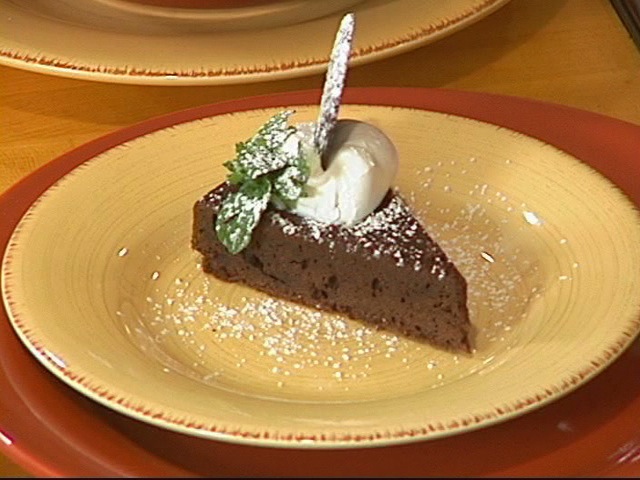
Chocolate Torta

Machines and gadgets are very important to many people, but honestly I really enjoy cooking when just a simple whisk, spoon or spatula just does the job. As is the case with the Chocolate Torta recipe from this week's episode of my TV show. Enjoy.

Mix by hand and bake. Forty-five minutes later you’ll be savoring this Italian Pastry delight!

choc_tort.jpeg

image, Hirsch Productions

George's Chocolate Torta

Makes 12 servings 

www.chefgeorgehirsch.com | As seen on George Hirsch Living it UP! TV series

1 cup all-purpose flour

1/4 cup cornstarch

1-1/4 tsp. baking soda

1/4 teaspoon salt

1 cup unsweetened Dutch cocoa powder

1-1/4 cups granulated sugar

1 cup water

1/3 cup sweet butter, melted

1 egg, beaten

1 egg white, beaten into whole egg

1 teaspoon vanilla extract

Confectioners sugar

Preheat oven to 325°. Lightly grease a 9-inch cake pan; set aside.

In small bowl, combine flour, cornstarch, baking soda and salt; set aside.

In large bowl, combine cocoa and granulated sugar until blended. With wire whisk, beat in water, then melted butter, egg, egg white and vanilla until smooth. Add flour mixture and beat until smooth. Pour into prepared pan.

Bake 45 minutes or until toothpick inserted in center comes out clean. On wire rack, cool for ten minutes in pan. With small spatula, loosen cake from sides of pan. Remove to a wire rack and cool completely. Place on plate and sprinkle with confectioners sugar. To serve, cut into small wedges.