Traditions for Health, Wealth and Good Fortune

For many Americans, New Year's means parties, football, and watching the ball drop in Times Square. But to others here and around the world the celebration wouldn't be complete without certain delicious traditional foods.

Black Eyed Peas are a centuries old New Year's tradition in many countries, served to ensure health, wealth and peace for the coming year. A traditional southern New Year's dish is Hoppin' John-black eyed peas and ham hocks. An old saying goes, "Eat peas on New Year's day to have plenty of everything the rest of the year."

The age old celebration in England and Scotland called the 'First Footing' continues today and always includes a bowl of black eyed pea soup along with a drink to toast the new year at midnight. In the old days people would gather coals from their hearth just before midnight and set out to visit friends in the first minutes of the new year. The first person to step through the door of the family they were visiting was called the 'first footer' and was believed to set the luck for the coming year. This person would present the spent coals they had gathered to the woman of the house who would store them away and use them to start the next New Year's fire. The first footer would get kisses and a hot bowl of black eyed pea soup. First Footing traditions were brought to the U.S. by European immigrants and are still practiced especially in the South and Northeast. With all variations black eyed peas are served for good luck and good health. Sometimes rice and black eyed peas with cabbage or collard greens are served. The rice symbolizes richesblack eyed peas for peace, and cabbage or collards symbolize money in the coming year.

Kwanzaa, the African American holiday beginning December 26 and lasting seven days, often includes black eyed peas at New Year's. Each evening the celebration focuses on one of seven principles beginning with unity and ending with faith. On New Year's Eve a feast takes place with each person bringing a dish to share. These dishes often include baked black eyed peas, pickled black eyed peas, black eye pea salads, and 'Hoppin' John', a thick stew with many variations that always includes black eyed peas.

In Texas the New Year's tradition may include Texas Caviar, a salad made from black eyed peas, hominy or sweet corn, vegetables and vinaigrette.

Many Japanese foods also are served to bring health, wealth and peace to the new year, including soba (buckwheat noodles), black soybeans, and miso soup. In Japan 'O-Shogatsu' or New Year's begins on December 31 and continues for almost two weeks. Before New Year's Day all bills are paid or current, and houses are cleaned from top to bottom, sweeping out the energy of the old year. At ten minutes to midnight everyone enjoys a simple bowl of long cut soba noodles in a broth made only with water, kombu sea vegetable and shoyu soy sauce, garnished with scallions. It is eaten through the first few minutes of the New Year to ensure longevity and prosperity.

Many Italian people welcome the New Year by tossing old things out of their windows to make room for the new and lucky to enter their households and lives in the year to come. More traditionally, the Italian people eat a dish called Cotechino Con Lenticchie: pork sausage served over lentils. This dish is eaten because of the presence of fatty rich pork sausage and lentils in the dish. Cotechino sausage is a symbol of abundance because they are rich in fat; while the coin-shaped lentils symbolize money.
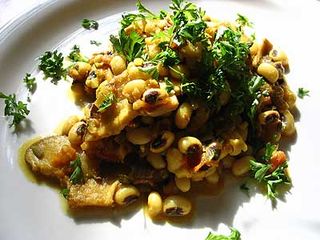
Hoppin John

Makes six servings | Recipe by Chef George Hirsch

1 pound dried black-eyed peas 

2 ham hocks, smoked 

2 medium onions, chopped 

6 cloves garlic, chopped 

2 bay leaves 

1 cup converted long-grain white rice 

10 ounces diced tomatoes with chilies, juices reserved 

1 large red bell pepper, finely diced 

3 ribs celery, diced 

1 jalapeno or Serrano pepper, minced 

2 teaspoons paprika 

3/4 teaspoon dried thyme leaves 

3/4 teaspoon ground cumin 

3 scallions, sliced 

hot red pepper sauce

In a large pot, combine the black-eyed peas, ham hocks, and 6 cups water. Add 1 chopped onion to the pot along with 3 cloves of garlic and bay leaves. Bring to a boil, reduce the heat to medium-low, and simmer gently until the beans are tender but not mushy, 2 to 2 1/2 hours. 

Remove and discard the bay leaves. Remove the hocks, cut off the meat in large shreds, and set the meat aside. Drain the peas reserving the liquid add enough water to liquid to make 2 1/2 cups of liquid to cook the rice. Add back to pot and bring to a boil. Add the rice, cover, and simmer until the rice is almost tender. 

In a sauté pan add olive oil, remaining garlic, onion, bell pepper, celery and jalapeno pepper. Sauté two minutes and add paprika, thyme, cumin and tomatoes. Add the cooked rice along with the peas. Top with sliced scallions and meat from the ham hocks. Serve with hot sauce on the side. 
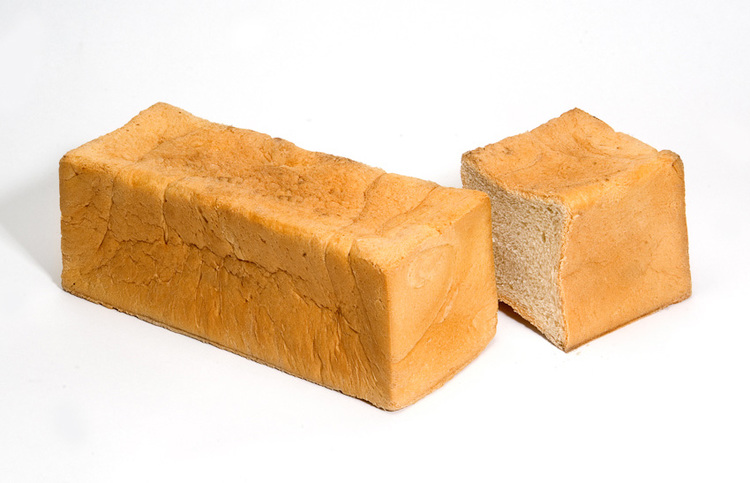
Pain de Mie

I'm sure you'll agree the aroma of freshly baked bread is comforting during the cold winter season. Pain de Mie is just another way of saying a fresh baked pullman loaf of bread (a long rectangular loaf). Do you prefer yours toasted with butter or jam? Or, maybe you fancy a simple egg salad, tuna salad or BLT sandwich? You might want to go for the full energy classic combo of peanut butter and banana.

Baking really is a science and baking bread successfully proves that there are so many factors to consider when thinking about how your loaf is going to bake-up. For example, the air temperature, the quality of the flour, the type of liquid used - are all to be taken into consideration. But, I'll spare you and won't turn this into a Baking 101 Class. I've given you a basic but fail-safe recipe should you want to bring out your inner most boulanger (bread baker).

Pain de Mie

Recipe by Chef George Hirsch | Makes 1 loaf

2/3 cup milk

2 teaspoons instant yeast

1/4 cup nonfat dry milk

1 cup water

6 Tablespoons sweet butter, softened

2 1/4 teaspoons salt

3 Tablespoons sugar

3 Tablespoons potato flour

4 3/4 cups all-purpose flour

For Full Recipe

King and Queen of Crown Roasts

A rack of lamb is considered the crown of traditional cuisine elegance. It is the perfect and impressive main entree to serve on special occasions; and it's easier to prepare than it appears. If you prefer the flavor of pork, the pork crown is for you.  

Crown either of these delicious traditional recipes for your holiday table.

For Lamb Crown RoastPork Crown Roast and Wild Rice & Sausage Stuffing Recipes.

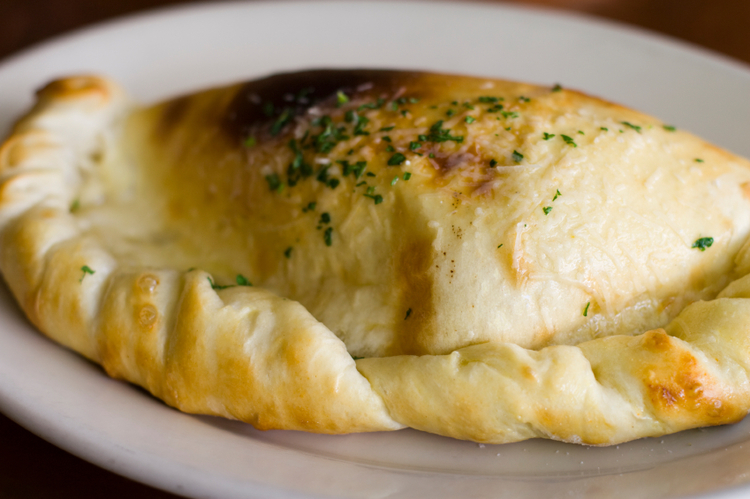
Brie Calzone

This flaky version of a Calzone is ideal for lunch, or make mini versions for a special occasion. If time is a concern by all means use pre-bought pie dough, but if you do have the time you won’t regret making my pastry dough.

George's Brie Calzone
Makes 4 entrée or 8 appetizer servings
Chef George Hirsch | chefgeorgehirsch.com

You can use George's Favorite Pastry Crust, or (15-ounce) package refrigerated pie crust, room temperature.

For the Calzone Crusts:
1/2 cup butter
1 1/2 cups all-purpose flour
1/2 teaspoon salt
1 teaspoon sugar
1 teaspoon baking powder
1/2 cup cold milk

For Pastry Crusts:
Chill the butter and milk before you begin. Chilling keeps the pastry crust flaky and prevents the fat pieces from melting into the flour and becoming tough. 

Next, mix the flour, salt, sugar and baking powder. Cut the chilled butter into the dry mixture using a pastry cutter or by pinching the fat into the mixture with your hands. The mixture should have fat lumps no larger than the size of raisins. If making pie crust in the summer time cool off the flour by measuring your flour and refrigerate one hour before making dough.

Pour in the chilled liquid just until the milk is absorbed, mixing gently with a fork. You should be able to gently press the dough into a ball. Mix the dough as little as possible: you don't want to cream the lumps of butter into the flour. A crust without lumps of butter will be dense, not flaky. Note that humidity will effect how much liquid the flour will absorb.

Split the dough into two equal parts. Pat them into balls, flattening them slightly, and wrap them in plastic wrap. The dough needs to rest in the refrigerator for at least 30 minutes. Overnight is preferred. Chilling lets the flour absorb all of the liquid, lets the dough relax and become more elastic, and keeps the fat in separate pieces which will give the crust a lighter texture when it is baked.


For the Filling:
1 Green apple, cored, peeled and chopped
1 package frozen spinach, defrost & well drained (squeeze out extra water)
2 Tablespoons bread crumbs
Fresh ground pepper to taste

For Filling:
Mix apple, spinach, black pepper and bread crumbs.

To Make Brie Calzone:
8 slices Brie, 1 slice for each Calzone 
1 egg, beaten with teaspoon of water

Roll out pastry dough (if from scratch) into two 10 inch circles and cut in half; or if using prepared store bought pastry cut circles into two half circles. Top each piece of pastry with 1/4 cup filling, and a thick slice of brie, leaving a one-inch edge around pastry. Brush outside edge of dough lightly with water. Fold over the dough into a pocket and seal edges. Pierce the dough with the point a small knife with three small holes to allow steam to escape.

Brush outside of Calzone with beaten egg and place on a baking sheet pan. 

Preheat oven to 425° degrees.

The Calzones will bake in about 10-12 minutes. 
To check doneness, the bottom of the Calzone will have a hollow sound when tapped with your finger. Serve warm.

Chef George Hirsch | chefgeorgehirsch.com

Wake Up To Anke

I'm always on the lookout for better made products, and I recently met energetic Anke, the "fittest" baker and founder of Anke's Fit Bakery. Her Cocoa Banana Granola made my Good Stuff pick!

As a fitness trainer and a fit baker she is a baker who is fit. She founded Anke’s Fit Bakery to bring her two passions, exercise and baking, together, and to offer clients and customers delicious food that tastes like the “real” thing, while providing energy based sweets while bringing a little fun back into fitness.

Growing up in Germany, Anke's grandmothers and mother would bake everything from scratch. She has created delicious treats, made from just a handful of natural ingredients that deliver on energy and taste. I enjoy Anke's Cranberry Almond Oat Cookies on afternoon coffee breaks (the truth is I can be satisfied with just one, but my good friends can consume the full 6 pack in one serving). I've recently tried her Cocoa Banana Granola which is sweetened only with organic Maple Syrup. It's the ideal breakfast treat after an early morning work out. It's a good feeling, knowing a bowl of Anke's Granola is waiting for me after my workout cool down. BTW, it is delicious on top of ice cream too!

Anke states, "...Read the labels! In many low-calorie snacks and desserts, most of the ingredients are processed. I believe strongly that the body just doesn’t know what to do with those manufactured components masquerading as food."

ankesfitbakery.com