Coffee Break

Here’s some trivia to share on your next coffee break or around the water cooler talk.

It is said that the first coffee break began in the US around 1880 in Stoughton Wisconsin. Mostly of Norwegian descent, the citizens of Stoughton's Coffee Street hired women because it was so near their homes that they could run home to check on their family and do some odd chores. There, a hot pot of coffee constantly was on the stove, so there was a cup at the ready to have a few minutes to relax and refresh with coffee before jogging back to work. 

I find it very convenient that the name derived from women who took breaks from work, only to go home and do some housework, then to sip coffee, before going back to work on a street named Coffee. Did you get that? I can’t imagine why the home-for-housework-with-the-coffee-thing didn’t stick and only the coffee part of the break did. How many people would actually return to work after the coffee break?

I’m ready for a good cup of coffee now! After 5PM - make it Irish please.
(WARNING: I don't advise drinking this version at work)

Irish Coffee 
recipe by George Hirsch | Makes one serving
From George Hirsch Living it UP! TV Series

1 ounce Jameson Irish Whiskey
1/2 ounce Baileys Irish Cream
1/2 cup hot strong coffee
Lemon wedge
Sugar to coat glass
Whipped cream

Prepare a sugar-rimmed glass by rubbing a piece of lemon or orange around the rim of a large wine glass. Dip 1/4 inch of the rim of the glass into a plate of sugar, coating the edge.

Place a teaspoon in glass. The spoon will diffuse the heat when hot coffee is poured into the glass. 

Add whiskey and Baileys. Pour coffee into glass over spoon. Remove spoon. Top with a dollop of whipped cream.

Corned Beef and Cabbage

Since the early 1900s, Americans proclaimed corned beef and cabbage to be their favorite Irish dish, even though it really never had graced dinner tables in Ireland. Since then, Americans have embraced it as the meal of choice for St. Patrick's Day, March 17th. Corned beef got its name before refrigeration, when meat was preserved using coarse grains of salt, called 'corn'. Today, beef is corned with spices strictly for flavor, not for preservation, so the meat must be refrigerated. Whether you're a wee bit Irish or not, boost your luck by celebrating St. Patrick's Day with friends and a feast. 

Corned Beef and Cabbage Recipe

Monks in a Jam

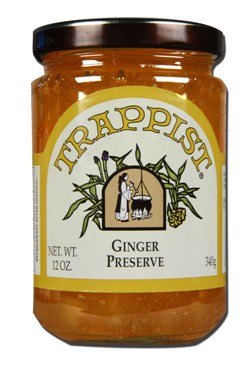
One of my favorite TV segments of all time was created on my trip to Spencer, Massachusetts; visiting Father Robert at St. Joseph's Abbey, seeing how Trappist Preserves are made and how it came to be. It was one of the most inspirational experiences to witness the dedication and commitment to a lifestyle that gives so many people pleasure. In fact, the Trappist Monks create a bit of happiness in every serving. I mean- who doesn't smile after having jam on toast? Better yet, really good jam! 

George Hirsch TV Segment: Trappist Preserves

Time for Shrove Tuesday

aka Pancake Tuesday since aprox. the 12th century. This celebration was marking the days preceding lent by using valuable ingredients like eggs, milk and sugar; hence cooking up pancakes 
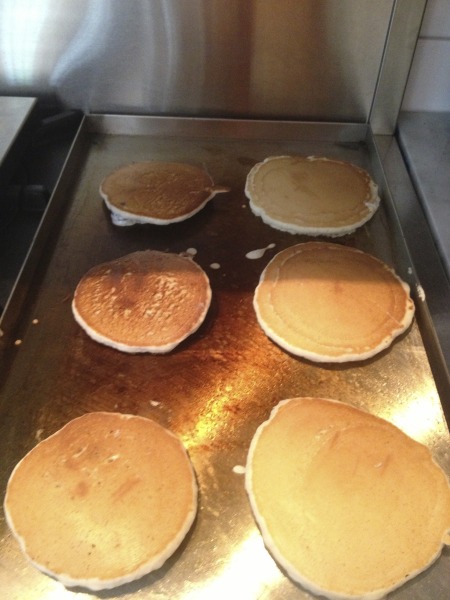
George's Griddle Cakes
Pancakes are one of the earliest forms of bread and are served up geographically in many different ways. You can be-all-traditional with baking powder, or try prospecting with sourdough pancakes like the early pioneers. Flip’em with oatmeal or buckwheat when in Vermont; or for a Dutch style treat serve with lemon, powdered sugar and jam. Substitute the flour for cornmeal and you’ll be enjoying it as Native American speciality.
Go Pollack by designing your own pancake creations with sliced apples, bananas, blueberries, strawberries, chocolate chips, chopped nuts.  
George’s Pancake Recipe
Makes eight pancakes | recipe by George Hirsch
1 1/2 cups all-purpose flour
3 1/2 teaspoons baking powder
1 teaspoon salt
1 Tablespoon pure cane sugar
1 1/4 cups milk
1 teaspoon vanilla
1 egg, beaten
3 Tablespoons butter, melted
In a large bowl, mix together well with a whisk all dry ingredients the flour, baking powder, salt and sugar. In a separate bowl mix all wet ingredients the milk, vanilla, egg and melted butter. Yes, use two bowls so the dry and wet ingredients blend better when combined. Add the wet to the dry and just strip with a large spoon or spatula until the dry ingredients have absorbed the wet. There may still be a few lumps, thats OK. Do not over mix, or pancakes will become tough.
Pre heat a non stick pan or lightly grease a griddle over medium high heat at 375 degrees F. Test the temperature by dropping a drop of water on surface of pan. Water will dance across the surface when at the correct temperature. You can test one cake before proceeding.
Pour one 1/4 cup scoop of batter onto the griddle for each pancake. If adding any fresh fruit or creations add at this time. You will begin to see bubbles form on the top side when brown on bottom, flip and brown on second side. Serve hot with syrup or favorite topping eaten immediately right off the griddle.
Finish off your stack with honey, molasses, can syrup, preserves, Nutella, or maple syrup.


Making the Best Fish and Chips

Buying food and reading labels can be a dizzying task. One can't help but be overrun with questions like - Is this good for me and my family? Is it safe to eat? Where did this come from? Is this sustainable? Reading labels can work most of the time, but what if there’s no label, as with fish? You would think if a fish has been around since the beginning of time and spawned billions of eggs - there wouldn’t be any problem, right? But not so fast, too much of anything can be harmful, even cod. 

Here's a solution - Seafood Watch, provided by the same folks who operate the Monterey Bay Aquarium; which by the way is a fantastic experience to visit in itself. I’ve had the occasion to visit for both leisure and as a keynote speaker and celebrity chef a few years back to kick off the Monterey Food & Wine Classic. 

Pardon me while I digress, I will get right back to cod...While I have you in Monterey, I want to mention a one degree of separation between John Steinbeck’s Cannery Row (the gritty side of life in this seaside post depression novel) and lovely Monterey. One of my friend’s families was the basis of a character in Steinbeck's tome. It is also that same good friend, Bert Cutino from the famed Tortilla Flat neighborhood on Canary Row who owns the famed Sardine Factory, a must stop when in town. 

Now, back to the cod. With it’s mild flavor, low fat content and a dense, flaky white flesh, it's no wonder cod is one of the most common fish used for fish & chips along with haddock and plaice. But, did you know it is currently at risk from over fishing in UK, Canada and other Atlantic waters? So be in the know with Seafood Watch. Use this guide to find ocean-friendly alternatives to seafood on the Seafood Watch “Avoid” list. It’s a good thing to use discretion and follow their lead so in the future when we are calling all cods, there are still some around.

Best Choices: Cobia (US farmed), Cod- Pacific (trap, hook-and-line, longline from AK)

Good Alternatives: Cod- Atlantic (Northeast Arctic and Iceland), Cod- Pacific (U.S. trawl)

Avoid: Cod: Atlantic, Iceland and Northeast Arctic (trawled),  and Pacific (imported)

The carbonation in the beer makes the batter exceptionally airy and produces a crispy coating. Malt vinegar is a British favorite on fish and chips.

George Hirsch Beer Batter Cod

George's Beer Batter Cod
Recipe by George Hirsch, Know Your Fire Cookbook, Putnam 1997 

1 1/4 cups all-purpose flour
1/4 cup sugar
2 teaspoons baking powder
Freshly ground black pepper to taste
2 eggs
1 teaspoon hot sauce
1 cup beer, a strong full flavored Stout or IPA
vegetable oil for frying
2 pounds cod fillet, cut into serving pieces
Malt vinegar for serving

Combine 1 cup of the flour, sugar, baking powder and black pepper in a medium bowl. Stir in the eggs and hot sauce. Slowly pour in the beer, stirring constantly, until the foam subsides and the batter is smooth. Let the batter rest for 15 to 20 minutes.

Heat 2 to 3 inches of oil to 370 degrees F. in a deep sauce pan or deep-fat fryer.

Dredge the the cod in the remaining 1/4 cup flour, shaking off any excess, and dip into the batter.

Carefully slip the pieces into the hot fat and cook until brown on both sides, turning once. Drain on paper towels. Serve with french fries and malt vinegar.