Real Men Don’t Eat Küche

Contrary to what you might believe, the tart quiche originated on German soil and not French. The widely popular classic of French cuisine heralds from an area of the medieval German kingdom Lothringen, aka Lorraine, France.

Years ago the pie was made with just eggs, cream, smoked bacon and bread dough. The word Küche or Küchen is German for cake; believed to be the origin of the word Quiche. 

Keep in mind, the Lorraine region has influence from Germany as well as France; so depending on who you ask or where you sampling your Quiche from - you may receive a slight variation of the recipe. Today a Quiche Lorraine is expected to contain cheese and onions, as well. The use of Gruyère cheese is a relatively new addition to quiche in France. Oh and don't expect to taste any Gruyère in your quiche in Lorraine; they are purists - sans the cheese. Too bad, it's a really good modification to the French recipe. In Germany expect onions and no cheese; and it's called Zwiebelkuchen.
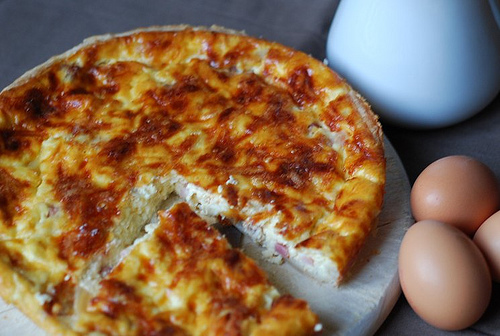
I find it interesting to know the classical origin of a dish, but what is more important when making a quiche or any dish for that matter is - what influences the taste and texture of a dish. So for me the appeal is not to stick to its classical roots, but how the melding of cultures and the additions of flavorful savory ingredients, in this case, like onions and cheese have improved on this dish. 

As for Real Men Don’t Eat Quiche, the best selling book by Bruce Feirstein, which satirized stereotypes of masculinity; I can assure you based upon all the quiches I have made - real men DO eat quiche! 

Tips: 

Add 1 Tablespoon flour mixed into filling prior to adding egg/ milk mixture to help set a filling that is too moist, example: tomatoes, mushrooms, etc..  

To prevent a raw bottom of quiche, pre-bake pastry dough Blind (8-12 minutes with no color) before filling.

Bake directly on an oven rack. Baking quiche on a cookie or sheet pan will cause the tart or pie bottom to be raw. 

Feel free to improvise with flavors, seasonings, vegetables, meats and seafood. Just keep in mind that adding very moist fillings such as mushrooms, tomatoes, etc will affect the custard of eggs and milk or cream.

Better than Quiche Lorraine 

recipe by George Hirsch | Makes one 9-inch tart

For George's Pastry Crust:

Prepare George’s piecrust the night prior or at least 1 hour ahead; or use store bought piecrust. Roll out pastry into a 9-inch tart or pie pan. Pre-bake pastry dough Blind (8-12 minutes with no color) before filling.

For the Filling:

1 cup (approximately 6 slices) thick cut or slab bacon, cut into thin strips-'lardons'
1/2 cup sweet white onion, sliced thin
2 green onions, chopped
3 eggs, beaten
1 1/2 cups half-half or milk
Pinch of sea salt and fresh grated nutmeg
1/2 teaspoon each hot sauce, fresh grated black pepper
1 cup Gruyere or good Swiss cheese, shredded

Optional: 

2 Tablespoons fresh Italian parsley, chopped 
2 Tablespoons Arugula, chopped

Preheat oven to 375F.

Pre heat a sauté pan to medium heat, cook bacon until brown and crisp. Remove bacon pieces and drain on a paper towel. Drain bacon fat from pan; add both onions to pan and cook for 2-3 minutes to slightly soften. Allow bacon and onions to cool. 

Place bacon, onion, parsley, Arugula, and Swiss cheese on top of blind baked pastry crust. 

In a bowl whisk together the eggs, milk, salt, nutmeg, hot sauce and pepper and pour the mixture over onion and bacon tart. 

Bake for 20 minutes, lower temperature to 350F; total baking time is 30 minutes or until egg custard is set. Allow to cool slightly and serve warm or at room temperature.  
 image

Pastry of the Nobility

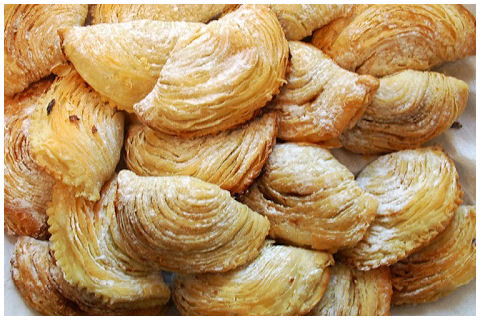
That is- during the Renaissance. Have you ever had sfogliatelle? It just happens to be the very first pastry I learned to bake; let me add labor intensive to make. I have loved it ever since. As you know, I don't gravitate towards chocolate, mouses or cakes. The sfogliatelle is anything but that. It's the right mix of many, many layers of thin flakey dough, stuffed with a citron semolina and ricotta filling; shaped like a clam shell. It has a bit of crunch with a dense custard textured center.

Sampling purely for research purposes, (ahem) I find it difficult to decide - is sfogliatelle better in Rome or Amalfi? Well New Yorkers, I admit this Neapoliatan pastry tastes just as good in the Bronx, NY. But please do yourself a favor and go to a real authentic Italian pastry shop. Tastes best, served warm with a good espresso.

sfogliatelle

Tapenade

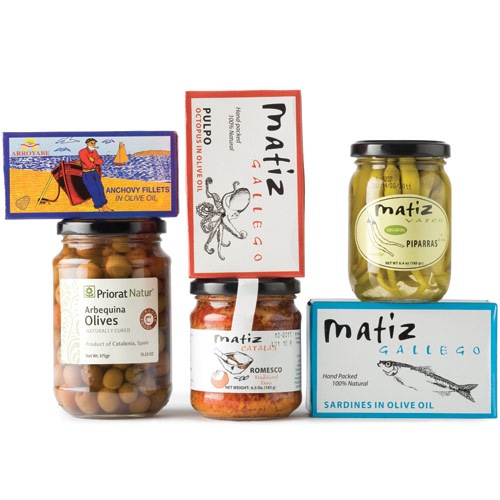
How about entertaining with a bit of Northern Spain/ South of France influence? Stock up on Olives and Anchovies. Tip: Give Arbequina olives a try - they are grown in Catalonia, Spain and have a buttery flavor with hints of pepper.


Tapenade comes from the word tapeno which means capers in Provence. The addition of sun dried tomatoes adds a little sweetness.

Olive Tapenade

Recipe by George Hirsch | Makes 1 cup

2/3 cup black oil cured olives (Kalamata or Nicoise), pitted and finely chopped 

2 anchovy fillets in oil, drained and finely chopped 

4 cloves caramelized garlic 

2 Tablespoons capers, drained, rinsed under cold tap water and finely chopped 

2 small sun dried tomatoes, finely chopped 

4 Tablespoons virgin olive oil 

1/4 teaspoon freshly ground black pepper 

3 basil leaves , chopped

In a bowl, mix together the olives, anchovies, garlic, capers, sun dried tomatoes, oil, pepper, and water. Spread Tapenade on toasted French baguette bread, top with fresh basil, or serve with your favorite sandwich. 

February Flavors

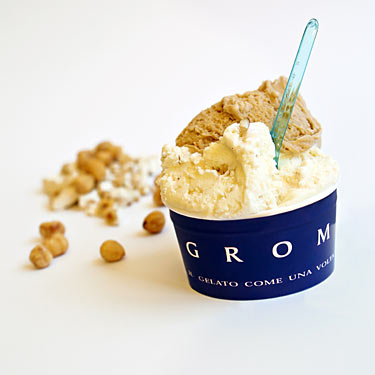
Well here's one more reason to think of warmer weather in February; Grom and their acclaimed Gelato and Fruit Sorbets. Grom's Gelato tastes like I walked-up to a Gelateria on Via Veneto, but the odd thing is - I'm in New York. How is this possible? It's a great story. 

Two Torin partners, Martinetti and Grom fused their passion and intentions to make the best artisanal Gelato and make it available to the world, mindfully. Sounds simple, but it's not. To producer food this way, it is actually harder. They simplified everything in the ingredients; adding no preservatives or flavor enhancers. Slow food is the basis for their local ingredients. Grom takes great pride in telling you what's in their product and also go through the effort to list what you are not eating. Each ingredient has an address of origin and a story behind it. The milk is from Savigliano, the peaches from Canale, the almonds from Sicily, and strawberries from Ribera - you get the picture. The partners have also acquired land to produce some of there own ingredients.

In just a matter of seven years Grom has launched a few shops in New York; in The Village and on The Westside, with another on the way. Even with Grom expanding, Martinetti and Grom have stressed the importance of not getting too big, shunning the word franchise. 

The word on Grom pistacchio, it's the best - you just have to try it. 

GROM New York:
233 Bleecker Street (and Carmine) - Greenwich Village - New York City - Ph. (+1) 212 206 1738 
2165 Broadway (and 76th) - Upper West Side - New York City - Ph. (+1) 212 362 1837

Coulommiers Rouzaire

You know I like to pass along good stuff when I come across it. Today's topic, the ever important wedge of soft cheese - that you don't need to hold on to your hat, when buying, this quality of product.

Fromagerie Rouzairein, is a third generation cheese factory owned by the Rouzaire family. The factory is located less than one hour from Paris center, in the heart of the Seine et Marne, the Île-de-France region. 

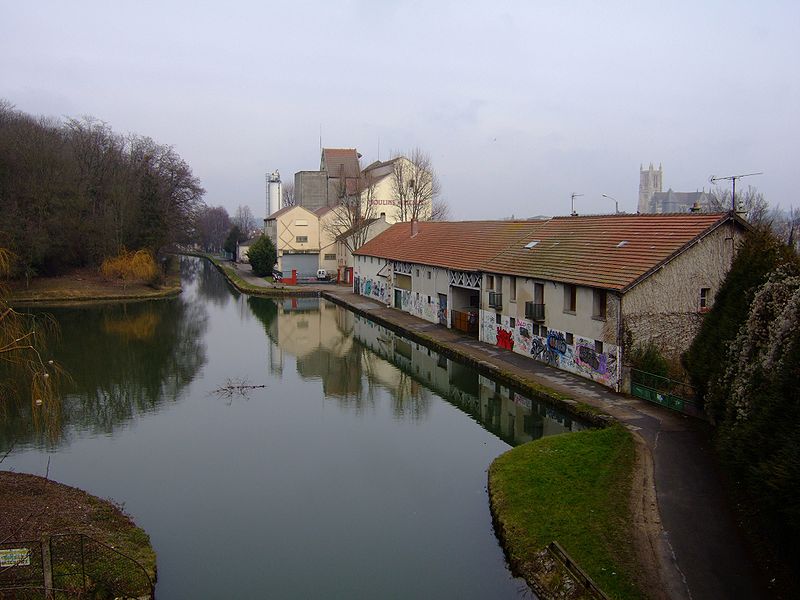
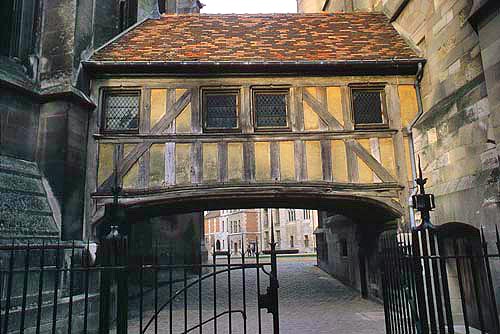
Old Ourcq canal dockside in Meaux, France, image; LundeuxMeaux medieval passage

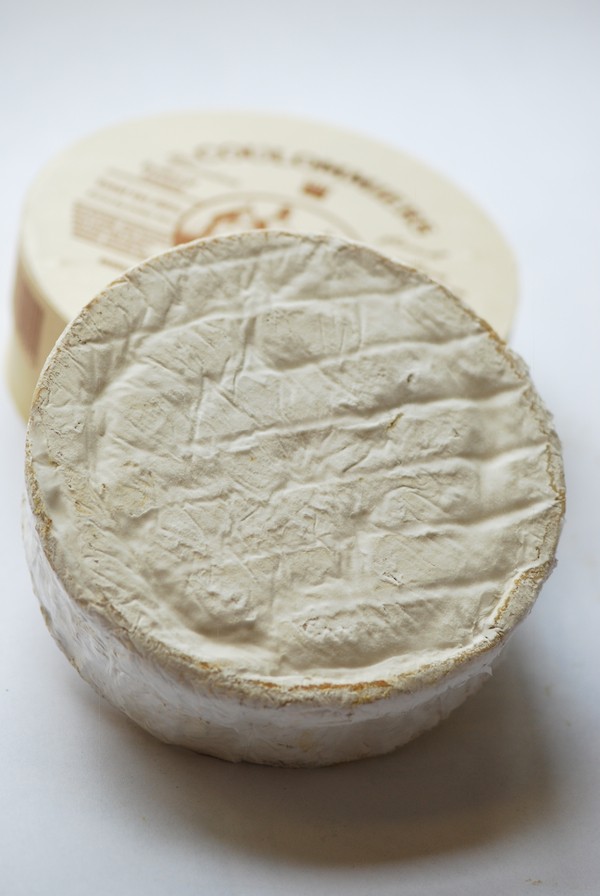
Coulommiers, made from cows milk, is considered a member of the Brie family made in Meaux, aka the "land of Brie," about 40 miles east of Paris. It is smaller and thicker than the more typical Brie-style cheeses, and some say that Coulommiers is the predecessor of Brie. 

Coulommiers' hand molded artisanal cheese is described as "the color of fresh churned butter with a supple paste and well-developed rind with a hint of hazelnut." 

The famous Brie de Meaux, crowned "king of cheeses" at the 1815 Congress of Vienna, has a Label of Controlled Origin. It is a distinctively soft cheese, encased in a covering of white skin, scattered with reddish pigments, with a light hazelnut taste

Coulommiers is delightful on crackers, spread on a baguette and pairs well with with Chardonnay, Sauvignon Blanc, or even Merlot.

Available at fine specialty shops and artisianalcheese.com